

Ultra-thin flexible on-metal RFID
BX-UT7030-ESD Ultra-Thin Flexible On-Metal UHF RFID Label
A 0.4 mm ultra-thin flexible passive UHF RFID label engineered for electronic-component ESD shielding bags and metallic surfaces, with a direct inkjet-printable face compatible with EPSON CW4000/6000 series printers.
Request a quote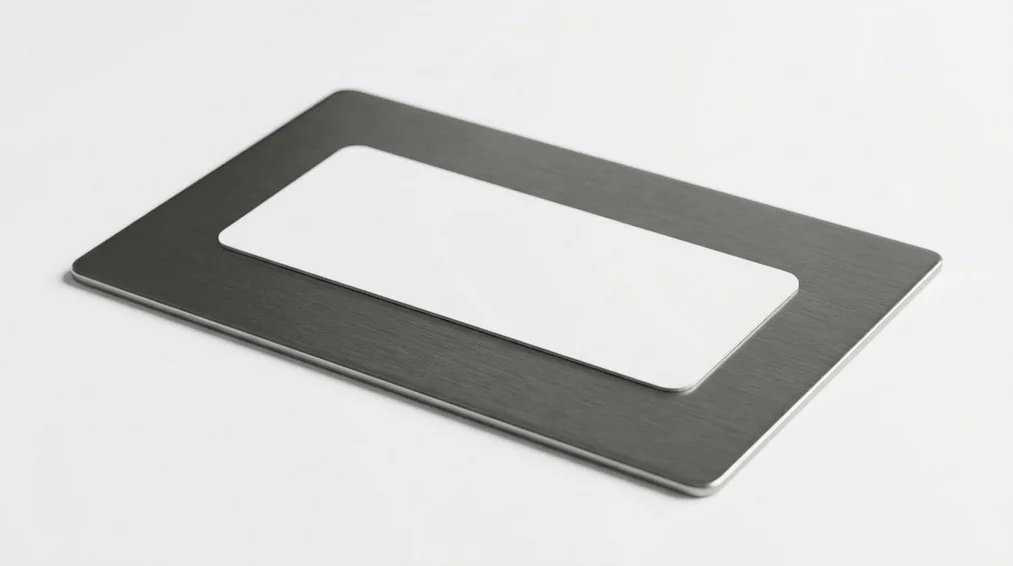
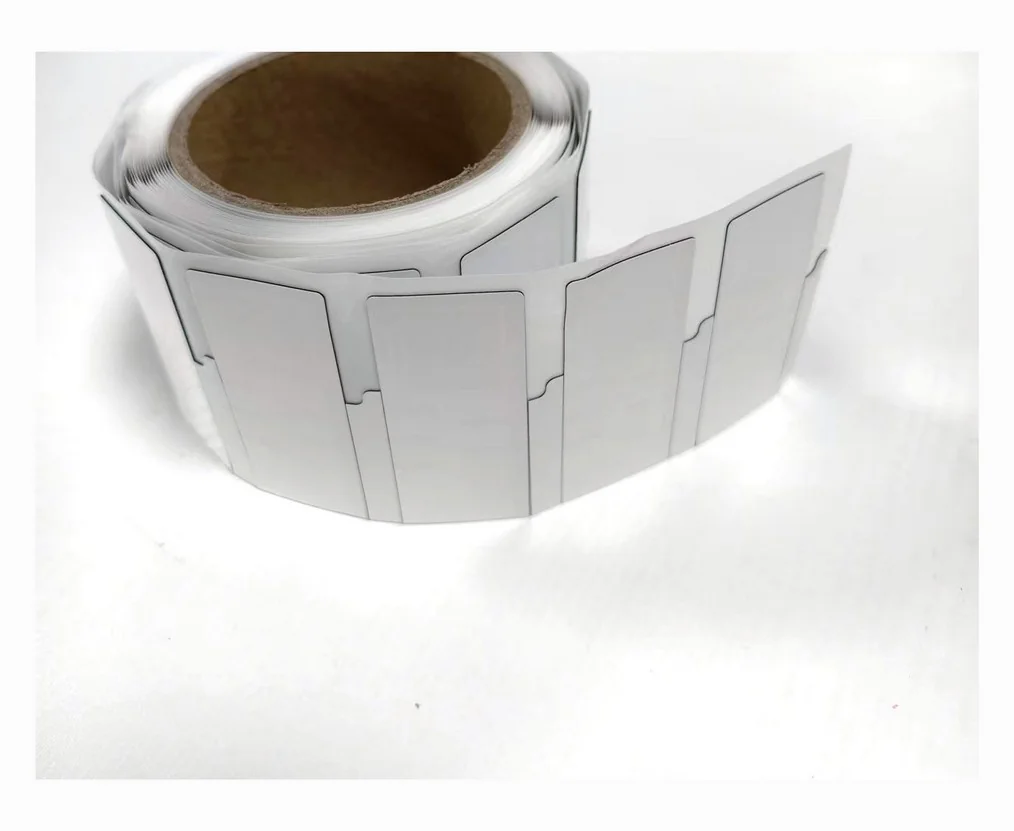
Inkjet-Printable Face
The face is specified as direct inkjet-printable and compatible with EPSON CW4000/6000 series printers. The 0.4 mm thickness and the inkjet-printable face are the defining construction points of this model.
Electrical and RF Specifications
| Model | BX-UT7030-ESD |
|---|---|
| Product type | Ultra-Thin Flexible On-Metal UHF RFID Label |
| Air interface | EPC Gen2v2 / ISO/IEC 18000-6C |
| Mode and frequency | Passive · 902–925 MHz |
| IC | Impinj M830 |
| Mounting surface | Optimized for ESD shielding bags and metallic surfaces; reading performance may vary on non-metallic surfaces. |
| Typical read range | On metal, US (FCC): handheld 0.5 W approx. 5–6 m; fixed 2 W approx. 8–10 m |
Actual performance depends on surface material and conditions of use. This page makes no unverified read-range, certification or project-compliance commitment.
Memory and Reliability
| EPC memory | 128 bits · read and write |
|---|---|
| TID memory | 96 bits · read only |
| User memory | 0 bits |
| Access and kill passwords | Access: 32 bits; Kill: 32 bits (read and write) |
| Endurance / retention | 100,000 cycles · 10 years |
| ESD (HBM) | Max. 2,000 V |
| IC operating temperature | −40 °C to +85 °C |
“IC operating temp.” is the IC temperature only; it is not the tag RF operating temperature and does not replace labelling, post-labelling or storage conditions.
Mechanical, Printing and Delivery
| Dimensions and tolerance | 70 × 30 × 0.4 mm (L × W × T), tolerance ±0.5 mm, corner radius R2 mm |
|---|---|
| Label pitch | 38.1 mm |
| Printing compatibility | Direct inkjet-printable surface; compatible with EPSON CW4000/6000 series printers |
| Roll and printing | Core ID: 76.2 mm · Quantity per roll: 1,000 pcs · Inkjet: EPSON CW4000/6000 Series |
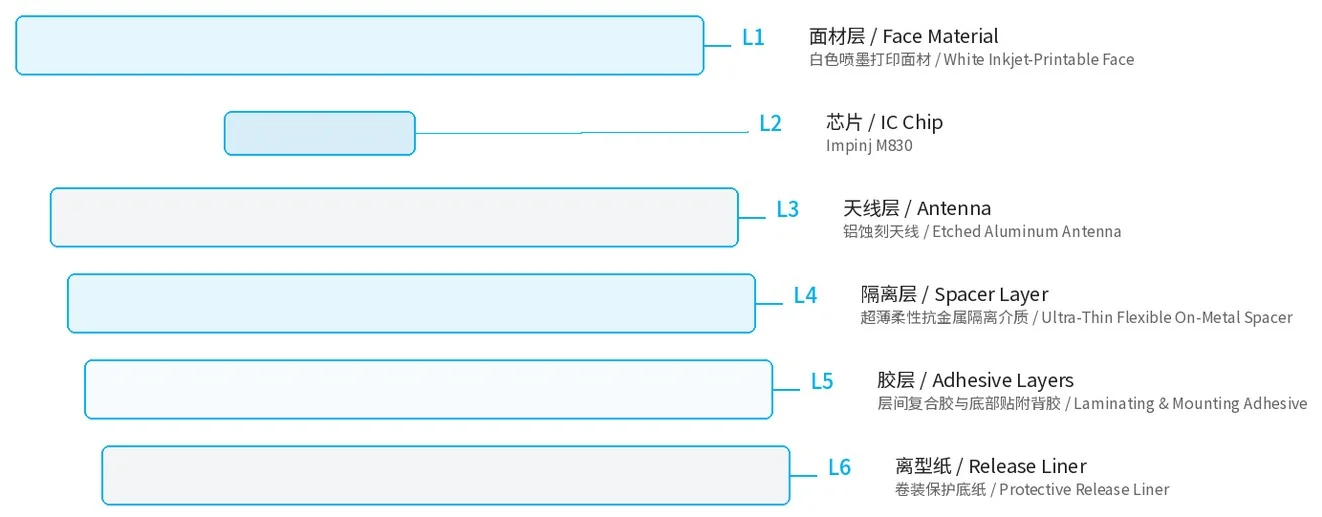
| Face material (L1) | White inkjet-printable face |
| IC (L2) | Impinj M830 passive UHF chip |
| Antenna (L3) | Etched aluminum antenna |
| Spacer (L4) | Ultra-thin flexible on-metal spacer (total thickness 0.4 mm) |
| Adhesive layers (L5) | Laminating and mounting adhesive |
| Release liner (L6) | Protective release liner |
Labelling, Use and Storage
| Labelling environment | 10–40 °C / 20–80% RH |
|---|---|
| Ideal application temperature | +21 °C to +38 °C; application below 10 °C is not recommended |
| Post-labelling environment | −20 °C to +50 °C / 20–80% RH |
| Storage conditions | 23 ± 5 °C / 50 ± 10% RH |
| Storage and shelf life | Store sealed in an antistatic bag away from direct sunlight; 1 year from manufacture under the conditions above |
The conditions above apply separately to storage, labelling and the post-labelling environment. They are independent of the IC operating temperature and must not be mixed or substituted for one another.
Customization
Monochrome/full-color inkjet printing, EPC pre-encoding, custom dimensions, and specialty industrial adhesives are available.
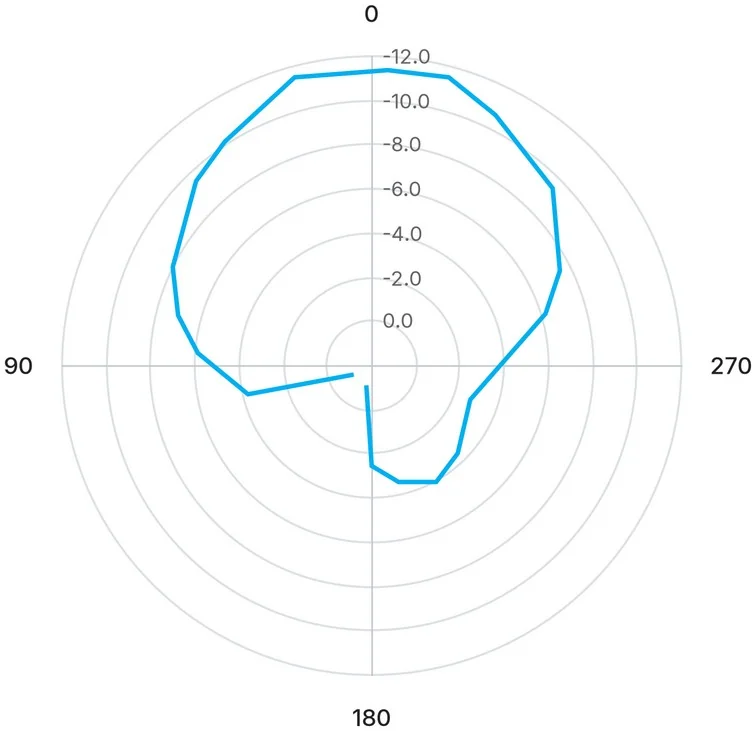
RF Characterization
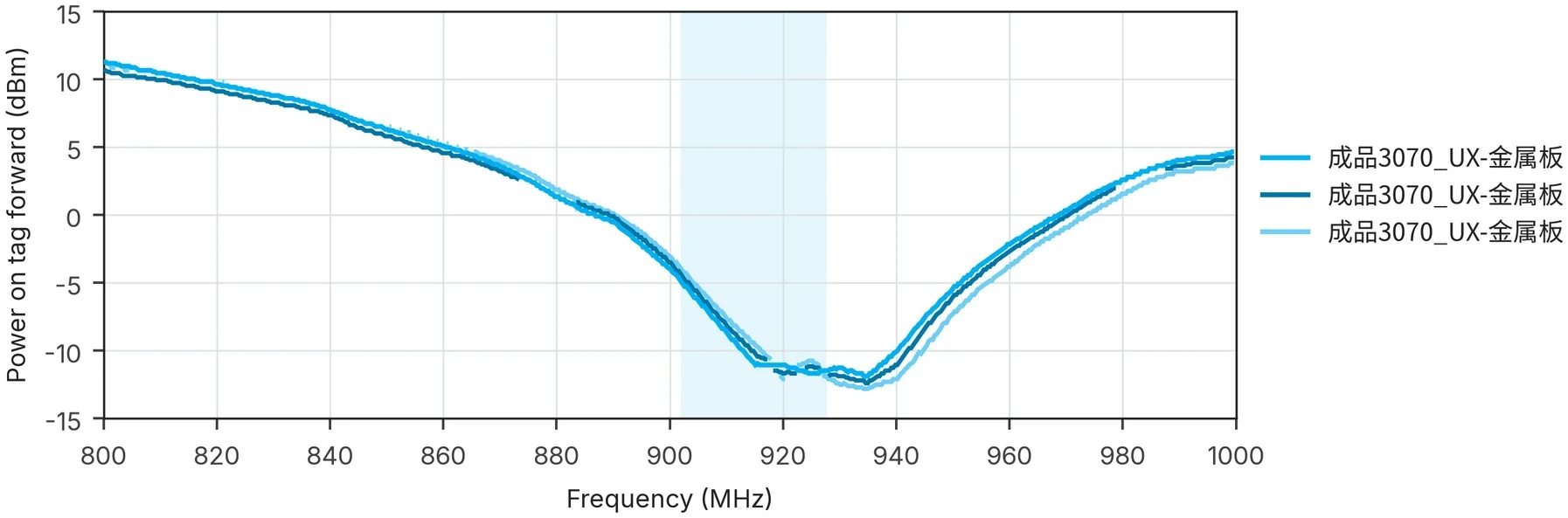
The following figures are from the datasheet. They are characterization plots, not a guarantee of project read range.
Typical Applications
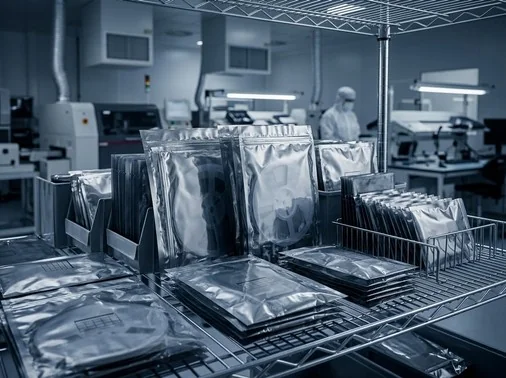
The following typical-application scenes are taken from the source datasheet; they are not in the same style group as the product photographs above.



Questions
How thin is the BX-UT7030-ESD label?
The datasheet specifies 70 × 30 × 0.4 mm (length × width × thickness), with a tolerance of ±0.5 mm and a corner radius of R2 mm. The 0.4 mm thickness is the total construction, including the ultra-thin flexible on-metal spacer.
Can the label face be inkjet-printed?
Yes. The datasheet specifies a direct inkjet-printable face compatible with EPSON CW4000/6000 series printers. Customization listed in the datasheet includes monochrome or full-color inkjet printing.
What frequency is specified for BX-UT7030-ESD?
The datasheet lists a passive UHF label at 902–925 MHz, with air interface EPC Gen2v2 / ISO/IEC 18000-6C and an Impinj M830 chip. The datasheet lists only 902–925 MHz for this model; no other frequency band is specified.
What surfaces is this label for?
It is optimized for electronic-component ESD shielding bags and metallic surfaces. Reading performance may vary on non-metallic surfaces.
What typical read range is stated?
On metal, US (FCC): handheld 0.5 W approximately 5–6 m; fixed 2 W approximately 8–10 m. Actual performance depends on surface material and conditions of use. This page makes no unverified read-range, certification or project-compliance commitment.
Actual performance depends on surface material and conditions of use. This page makes no unverified read-range, certification or project-compliance commitment.
This model belongs to the Ultra-Thin Flexible On-Metal RFID Labels series. It is a different product from the existing 7030 Flexible On-Metal RFID Label.
Request BX-UT7030-ESD Product Information
Include your deployment country, reader, mounting surface and quantity.
Catalog available on request.
CONTACT SALES
Request a quote
Tell us the product, quantity and destination country. We’ll reply with specifications, sample options and pricing.
Email sales@bxaiot.comOpens an email draft for you to send.
Privacy policyPrepare a project email
Optional: add a few details to your email draft. Nothing is submitted or stored on this website.
Open an email draftOpens an email draft with your product selection and requirements.